Introduction to Best Driving Apps
Why Every Driver Needs Smart Apps Today
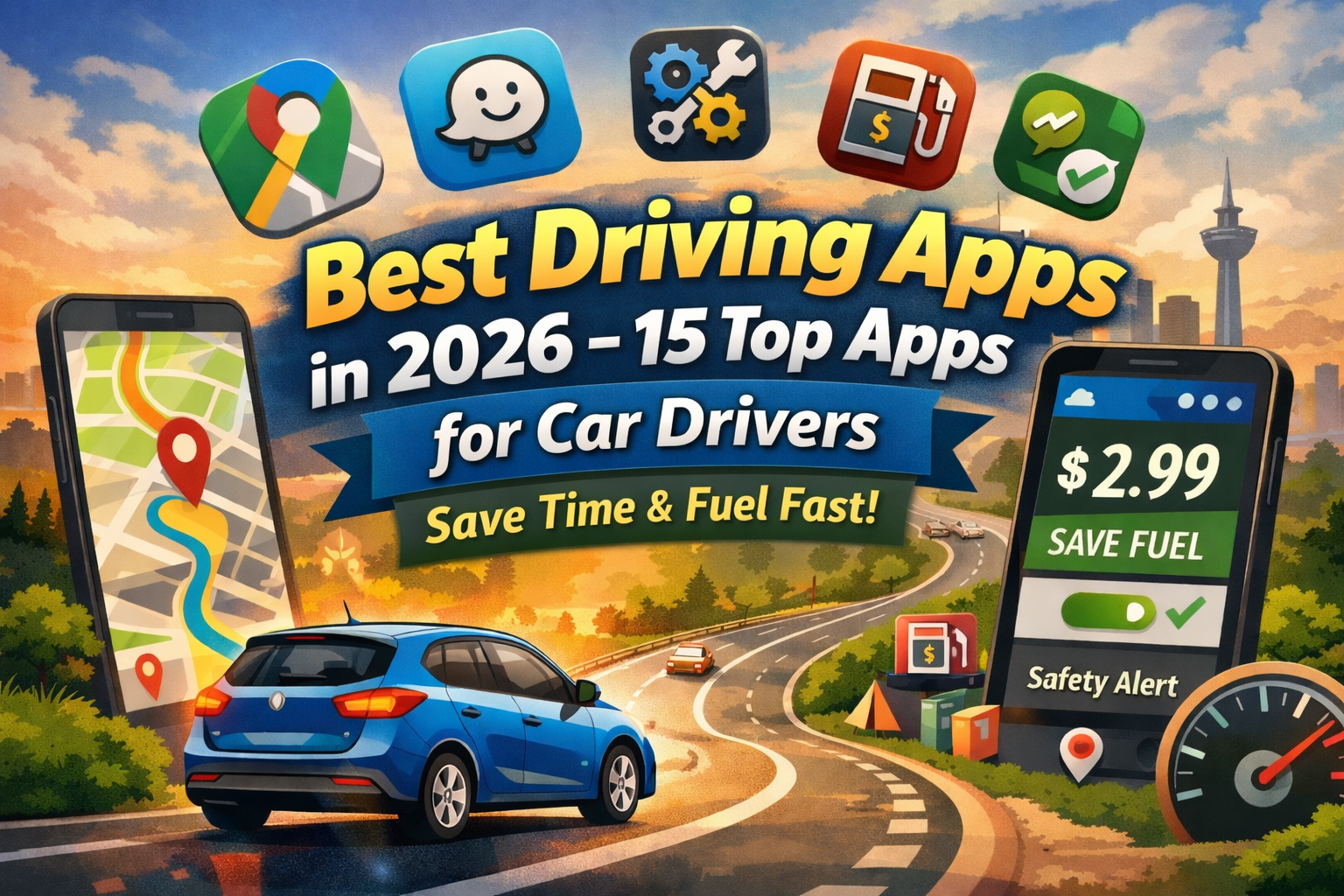
Let’s be real—driving today is nothing like it used to be. Gone are the days when people relied on paper maps or asked strangers for directions. Now, everything fits right into your pocket. The rise of smartphones has completely transformed how we drive, and that’s exactly where best driving apps come into play. These apps are not just tools; they are like digital copilots guiding you through traffic, helping you save fuel, and even keeping you safe.
Think about it—have you ever been stuck in traffic wondering if there’s a faster route? Or maybe you’ve driven into an unknown area and felt completely lost? That’s where driving apps become lifesavers. According to recent reports, apps like navigation tools now use real-time data, AI-based route suggestions, and crowd-sourced information to help drivers avoid delays and hazards. (MobileKiShop)
The reality is simple: if you’re not using driving apps, you’re probably wasting time, fuel, and energy. Whether you’re a daily commuter, road trip lover, or delivery driver, these apps can make your life easier in ways you didn’t even imagine.
How Technology is Changing Driving Experience
Driving is no longer just about getting from point A to point B. It’s about efficiency, safety, and convenience. Modern driving apps are powered by AI, GPS tracking, and real-time analytics that continuously learn from user behavior.
For example, some apps now predict traffic patterns before you even start your journey. Others suggest fuel-efficient routes or notify you about speed cameras and road hazards. (IDL Services Inc.) That means your driving experience is becoming smarter every day.
Imagine your app telling you: “Take a left now to avoid 20 minutes of traffic.” Sounds like magic, right? That’s exactly what the latest best driving apps are doing.
Types of Best Driving Apps
Navigation Apps
Navigation apps are the backbone of all best driving apps. These apps provide turn-by-turn directions, live traffic updates, and route optimization. They ensure you always reach your destination in the fastest and safest way possible.
Safety Apps
Safety-focused best driving apps help drivers avoid accidents by providing alerts for speed limits, road hazards, and emergency assistance. Some even detect crashes automatically and notify emergency contacts.
Fuel & Expense Apps
Fuel tracking apps help you monitor fuel consumption, find the cheapest petrol stations, and calculate trip costs. These driving apps are perfect for people who want to save money on every drive.
Car Maintenance Apps
These apps remind you about servicing, track vehicle health, and even predict potential issues. In short, they help keep your car in top condition without stress.
Top Navigation-Based Best Driving Apps
Google Maps
When it comes to best driving apps, Google Maps is often the first name that comes to mind. It’s like the Swiss Army knife of navigation. It offers real-time traffic updates, offline maps, and AI-powered route suggestions. (SivaCerulean Technologies)
What makes it special is its ability to provide accurate directions in over 200 countries. It also includes features like 3D immersive navigation and voice guidance powered by AI.
Waze
Waze is another powerhouse among driving apps. Unlike traditional navigation apps, it relies heavily on community input. That means drivers report accidents, traffic jams, and speed traps in real time.
This makes Waze incredibly accurate for daily commuters who want to avoid delays and save time. (Rated Driving)
Apple Maps
Apple Maps has evolved significantly and is now one of the most reliable driving apps, especially for iPhone users. It focuses on privacy, smooth design, and seamless integration with Apple devices.
HERE WeGo
If you often travel in areas with poor internet connectivity, HERE WeGo is one of the best best driving apps for offline navigation. It allows users to download entire maps and navigate without internet access.
Best Driving Apps for Road Trips
Roadtrippers
Planning a road trip? Then this is one of the must-have driving apps. It helps you discover hidden gems, scenic routes, and interesting stops along the way.
ViaMichelin
ViaMichelin is perfect for planning cost-effective journeys. It calculates fuel costs, toll charges, and suggests the best routes based on your preferences. (Rated Driving)
Best Driving Apps for Safety
Speedometer Apps
Speed tracking apps are essential driving apps for monitoring your speed and avoiding fines. Some even provide detailed trip analysis and driving behavior insights.
Emergency Assistance Apps
These apps can automatically detect accidents and alert emergency services. They are especially useful for long-distance drivers.
Best Driving Apps for Fuel Saving
Fuel Tracking Apps
Fuel apps help you track your mileage and fuel expenses, making them essential driving apps for budget-conscious drivers.
Cost Estimation Apps
Apps like ViaMichelin allow you to estimate total trip costs, including fuel and tolls, helping you plan smarter.
Comparison Table of Best Driving Apps
| App Name | Best For | Key Feature | Price |
|---|---|---|---|
| Google Maps | All-round navigation | AI routes, global maps | Free |
| Waze | Traffic updates | Real-time alerts | Free |
| HERE WeGo | Offline maps | No internet needed | Free |
| ViaMichelin | Cost planning | Fuel & toll calculation | Free |
| Roadtrippers | Road trips | Scenic route planning | Freemium |
Key Features to Look for in Best Driving Apps
When choosing best driving apps, you should focus on features like real-time traffic updates, offline maps, voice navigation, and route optimization. These features ensure a smooth and stress-free driving experience.
Pros and Cons of Using Best Driving Apps
Using best driving apps has become almost second nature for modern drivers, but like any technology, they come with both advantages and limitations. Understanding both sides helps you use these apps more effectively instead of relying on them blindly. When used correctly, best driving apps can completely transform your driving experience, but it’s also important to be aware of where they might fall short.
Pros
One of the biggest advantages of best driving apps is how much time and fuel they save. These apps analyze live traffic conditions and instantly suggest faster routes, helping you avoid jams, roadblocks, and unnecessary delays. Over time, this not only reduces your travel time but also cuts down fuel consumption, which is especially important with rising fuel costs. Instead of guessing the best route, you’re making data-driven decisions every time you drive.
Another major benefit is real-time updates, which act like having a constant flow of information while you’re on the road. Best driving apps notify you about accidents, road closures, weather conditions, and even speed limits.
This allows you to react quickly and adjust your route without stress. It’s almost like having thousands of drivers sharing information with you at the same time, making your journey smarter and more efficient.
Safety is another area where best driving apps truly shine. Many apps provide voice navigation, so you don’t have to look at your screen while driving. Some even include advanced features like lane guidance, hazard alerts, and emergency assistance. These features reduce distractions and help you stay focused on the road, which ultimately lowers the risk of accidents. For new drivers especially, these apps act like a guiding companion, boosting confidence behind the wheel.
Cons
Despite all the benefits, best driving apps do have a few drawbacks that you should keep in mind. One of the most common issues is battery consumption. Since these apps use GPS, internet, and continuous screen activity, they can drain your phone battery quickly, especially during long trips. If you’re not prepared with a car charger or power bank, you might find yourself running out of battery at the worst possible time.
Another limitation is that many best driving apps depend on an internet connection for full functionality. While some apps offer offline maps, features like real-time traffic updates, live alerts, and route optimization often require active data. This can be a problem in remote areas or regions with poor network coverage, where the app may not perform at its best.
There’s also the issue of over-reliance on technology. Sometimes drivers trust best driving apps too much without paying attention to actual road conditions. GPS errors, outdated maps, or incorrect directions can occasionally lead to confusion. That’s why it’s always important to use these apps as a guide, not a replacement for your own awareness and judgment while driving.
In the end, best driving apps are incredibly powerful tools when used wisely. They offer convenience, safety, and efficiency, but understanding their limitations ensures you get the best possible experience without any unexpected problems.
Tips to Choose the Right Best Driving Apps
Choosing the right best driving apps isn’t just about downloading the most popular option—it’s about finding the one that fits your driving habits perfectly. Think of it like choosing the right pair of shoes. What works for a runner won’t necessarily work for someone going on a casual walk. In the same way, the best driving apps for you depend on how, where, and how often you drive.
If you frequently travel to new places or go on long road trips, apps with offline maps are a must. They ensure you never get lost even when your internet connection drops. On the other hand, if you drive daily in busy city areas, you should focus on best driving apps that provide real-time traffic updates, accident alerts, and route optimization to help you avoid delays and save time.
Another important factor to consider when choosing best driving apps is ease of use. You don’t want to struggle with complicated menus while driving. The best apps are simple, intuitive, and offer voice navigation so you can keep your eyes on the road. Also, look for apps that integrate multiple features in one place—like navigation, fuel tracking, and parking assistance—so you don’t need to switch between different tools. Compatibility with your smartphone and car system is also crucial, especially if you use Android Auto or Apple CarPlay. Reading user reviews can give you real insights into how well these best driving apps perform in real-life situations.
Lastly, always think about your budget and long-term usage. Many best driving apps are free, but some offer premium features that can enhance your experience, such as ad-free navigation, advanced route planning, or detailed driving analytics. It’s worth trying a few options before settling on one. After all, the goal is to make your driving smoother, safer, and more efficient. When you choose wisely, the best driving apps don’t just guide your journey—they completely transform the way you drive.
Future of Best Driving Apps in 2026 and Beyond
The future of best driving apps looks incredibly exciting, and honestly, we’re just getting started. What we see today is only the foundation of something much bigger. With rapid advancements in artificial intelligence, machine learning, and real-time data processing, best driving apps are becoming smarter, faster, and more intuitive than ever before.
These apps are no longer just about navigation—they’re evolving into complete driving ecosystems that understand your behavior, preferences, and even your daily routines. Imagine opening an app that already knows where you’re heading before you even type it in. That’s the level of intelligence we’re moving toward.
One of the biggest transformations in best driving apps is the integration of AI-powered predictive analytics. Instead of simply reacting to traffic conditions, future apps will predict them in advance. For example, your app might suggest leaving 10 minutes earlier because it has analyzed traffic patterns and detected a likely delay.
This kind of proactive assistance can save both time and fuel, making driving far more efficient. Voice assistants are also becoming more natural and human-like, allowing drivers to interact with their apps without touching their phones. You can simply speak, ask questions, and get real-time answers while keeping your focus on the road.
Another exciting development is the introduction of immersive 3D navigation. Recent updates show that apps like Google Maps are working on detailed, realistic route visuals that make navigation easier to understand, especially in complex areas like highways and intersections. Instead of flat maps, drivers will see lifelike environments that mirror the real world, reducing confusion and improving safety. This is particularly useful for new drivers or those traveling in unfamiliar locations, as it eliminates guesswork completely.
Looking ahead, best driving apps will also integrate more deeply with smart cars and connected vehicle systems. Your app might sync directly with your car’s dashboard, display real-time diagnostics, and even suggest maintenance before a problem occurs. Features like automatic parking assistance, lane guidance, and driver behavior analysis will become more common. Some apps are already experimenting with features that monitor driver fatigue and send alerts when it’s time to take a break, adding another layer of safety.
In the long run, best driving apps will play a crucial role in the transition toward autonomous driving. While fully self-driving cars are still evolving, these apps will act as the bridge between manual and automated driving.
They will assist drivers with decision-making, improve situational awareness, and gradually introduce automation features that make driving easier and safer. The future isn’t just about reaching your destination—it’s about having a smarter, more connected, and stress-free journey every time you get behind the wheel.
Conclusion
Driving has evolved, and so have the tools we use. The rise of best driving apps has made driving safer, faster, and more convenient than ever before. What once required experience, guesswork, and sometimes even luck can now be handled with precision using smart technology. Whether you’re navigating through heavy city traffic or exploring unknown highways, these apps act like a reliable co-driver, guiding you at every step and helping you avoid unnecessary stress.
The real power of best driving apps lies in how they combine multiple features into one seamless experience. From real-time traffic updates and fuel-saving routes to safety alerts and car maintenance reminders, everything is designed to make your journey smoother. Imagine saving time on your daily commute, cutting down fuel costs, and feeling more confident behind the wheel—all because you’re using the right tools. That’s exactly the kind of transformation these apps bring into your everyday driving life.
Another important thing to understand is that best driving apps are not just for convenience—they are becoming essential. As roads get busier and travel becomes more complex, having access to smart navigation and real-time data is no longer optional. It’s a necessity for anyone who wants to drive efficiently and safely. Plus, with continuous advancements in AI and technology, these apps are only going to get better, smarter, and more personalized in the future.
At the end of the day, choosing the right best driving apps can completely change the way you experience driving. It’s not just about reaching your destination anymore—it’s about enjoying the journey, saving resources, and staying safe along the way. If you haven’t already started using the best driving apps, now is the perfect time to explore them and upgrade your driving experience to the next level.
FAQs
1. What are the best driving apps in 2026?
The best driving apps include Google Maps, Waze, HERE WeGo, and ViaMichelin.
2. Are best driving apps free?
Most best driving apps are free, but some offer premium features.
3. Which app is best for traffic updates?
Waze is considered one of the best best driving apps for real-time traffic updates.
4. Do best driving apps work offline?
Yes, apps like HERE WeGo and Google Maps offer offline navigation.
5. Which best driving apps save fuel?
Apps like ViaMichelin and Waze help optimize routes and reduce fuel consumption.